
CBDT has been given a collection target of Rs 5.69 trillion in personal income tax in the fiscal year 2019-20 - 19.2 per cent more than the Rs 4.77-crore collection in the previous year.

The groups, including those associated with the ruling Bharatiya Janata Party's parent organisation the Rashtriya Swayamsevak Sangh, have also threatened a big nationwide agitation if growth of illegal GM crops isn't checked.

To validate and continue using the existing PAN cards, citizens will have to link them to Aadhaar. Or else, they will be permitted to use Aadhaar instead for filing returns and while making other high-value transactions, specified under the Income Tax Act.

Nirmala Sitharaman has designed the revenue mix in such a way that while Centre's share in taxes would grow a massive 25 per cent, states' share would grow a dismal 6 per cent.

For insurance intermediaries like brokers, insurance repositories, third-party administrators, etc, 100 per cent FDI may be permitted.
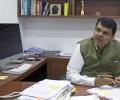
The committee has been tasked to come up with policy measures to boost agriculture exports, raise growth in food processing, attract investments in modern market infrastructure, value chains and logistics.
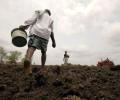
Till June 30, the southwest monsoon was 33 per cent lower than normal, which is among the worst in the last five years, with 28 of the 36 meteorological divisions recording deficient rain.

The studies found that sectors with the highest unaccounted income included real estate, mining, pharmaceuticals, pan masala, gutkka and tobacco, bullion and commodity markets, film industry, educational institutes and professionals.
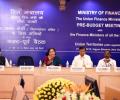
Sitharaman exhorted the states to work together with the Centre, stating that while the Union government sets the direction of economic growth, it is for the states to ensure effective implementation on the ground.
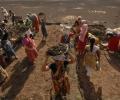
Around 40 per cent of the country is staring at drought-like conditions ahead of the monsoon as water levels have receded sharply.

It would involve constructing over 125,000 kilometres of roads and would form part of the third phase of the Pradhan Mantri Gram Sadak Yojana.

Tuesday's meeting at the PM's residence, attended by all the five secretaries in the finance ministry besides top officials of other economic ministries and NITI Aayog, cleared a five-year vision plan for the government to make India a $5-trillion economy by 2024.
By June 14, the monsoon should have reached central India. But this year it hasn't even covered Karnataka properly or entered the Northeast.

This meeting has led to the deferment of the Goods and Services Tax (GST) Council meeting by a day.

Despite a steady collection rate, the government faces a steep Budget target of Rs 6.1 trillion for CGST for 2019-20.

The US is pressing for taxing digital economy through the 'marketing intangibles' principle and the UK through a 'user-base' principle.

The report, floated recently, comes a few days after the government cancelled the registration of Bengaluru-based NGO Infosys Foundation for alleged violation of norms in receiving foreign grants.

The focus will be on tackling the unfinished agenda requiring immediate attention like tax structure for solar projects, uniform tax rate on state-organised and state-authorised lotteries, taxing non-potable alcohol besides certain changes in the law, extension for NAA and rate rationalisation.
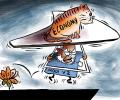
There is talk of a fresh approach to a new labour code as well as reforming land acquisition laws in such a way as to be politically.

The rates of price rise in many services used by the common man, including hospital and nursing, cook, domestic help and bus (fare), among others, have also touched double digits during the last four years, putting a burden on disposable income.
 © 2025 Rediff.com - Investor Information - Advertise with us - Disclaimer - Privacy Policy - Sitemap - Feedback - About us - Terms of use - Grievances